Building a Scalable Business Is Just Like Building a Strong House
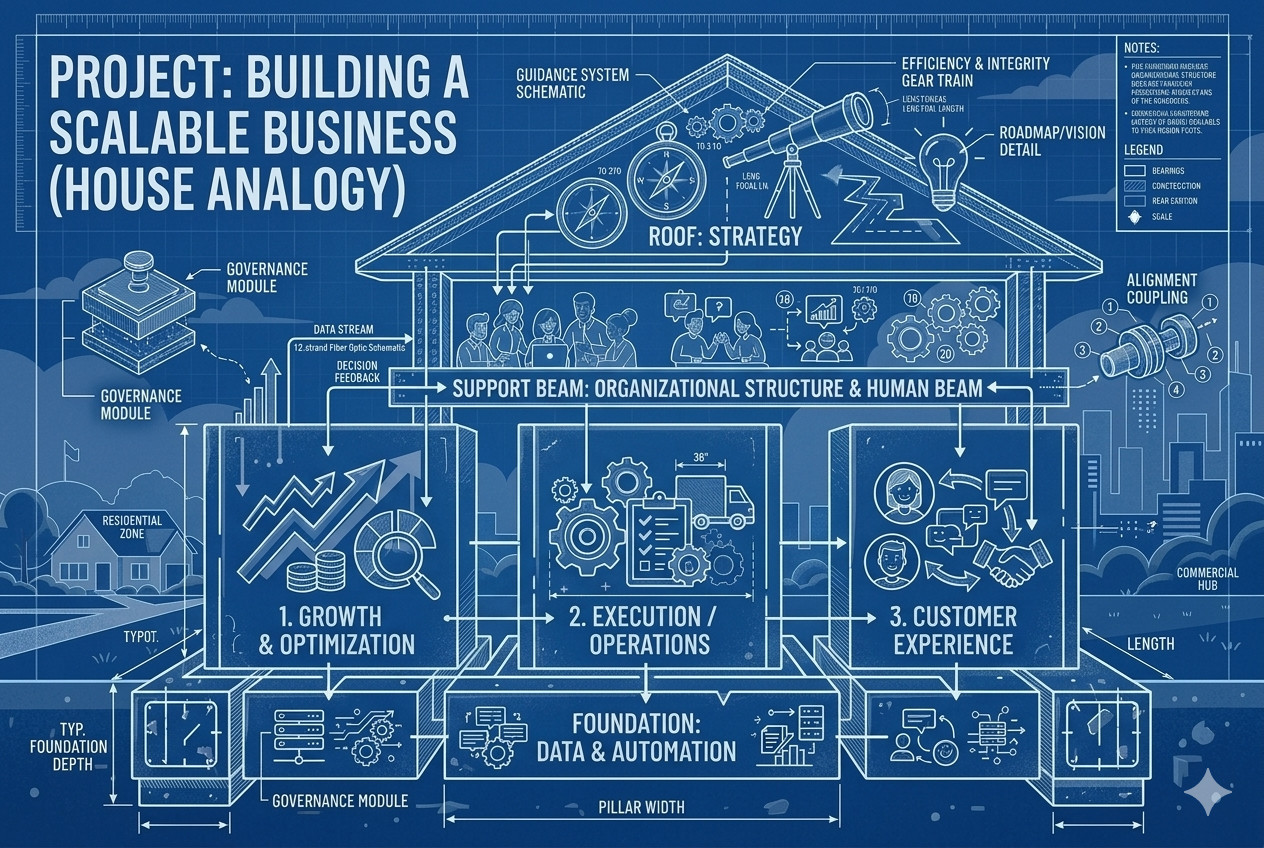
Most people think building a big, successful business is about flashy ideas, big funding rounds, or working harder than everyone else. But if you’ve ever tried to grow a company, you quickly learn the truth; scaling successfully is a lot like building a good home. Do it right and it stands strong for years, weathers storms, and gives everyone inside a solid place to thrive. Do it wrong and things start cracking, shifting, and eventually falling apart no matter how nice the paint looks.
The Foundation: Data and Automation
Everything starts with the foundation. In a house, if the foundation is weak, nothing else matters. The same is true in business.
- Your foundation is your data and automation backbone. This is what makes a business truly scalable.
- Automation plus clear workflows gives you efficiency and speed.
- Technology plus strong data governance gives you integrity and trust. When you have both, you create a single source of truth that lets you make fast, consistent decisions across every part of the company.
Without this foundation, you can grow fast but everything feels chaotic. Decisions contradict each other, mistakes get repeated, and the business becomes exhausting to run. That might work when you’re small, but it breaks fast once you start growing.
The Load-Bearing Walls: The Three Essential Pillars
Once your foundation is solid, you need strong walls to hold the weight as the business grows. I see three main load-bearing pillars:
1. Growth & Optimization
This pillar is about finding and winning new customers while constantly improving profitability. You identify and pursue new markets, build a healthy sales pipeline, optimize pricing and costs, and use data to shorten sales cycles and increase win rates.
Growth without optimization just burns cash.
2. Execution/Operations
This is where promises turn into reality. Great execution means delivering customer orders flawlessly with clear responsibilities, standard processes, and real-time visibility. You put quality checks in place and use data to make continuous small improvements. When operations run smoothly, everything else becomes easier.
3. Customer Experience
Never lose sight of the people paying the bills. This pillar focuses on deeply understanding customer needs, pain points, and desired outcomes. Give them clear, timely updates on progress, delays, or changes. Loop their feedback back into the business so you can keep getting better. Satisfied and well-informed customers become your best advocates.
When these three walls are strong and working together, your business can carry a lot of weight without leaning.
The Support Beam: Organizational Structure & Human Behavior
Even with a solid foundation and strong walls, you still need support beams to hold everything together. In business, that support beam is your organizational structure and human behavior. This is where a lot of companies quietly struggle. You can have great technology and processes, but if your people aren’t aligned, engaged, or supported, the whole thing starts to fall apart.
Focus on three things here:
- Employee Engagement: Create an environment where people feel valued, heard, and excited to contribute.
- Change Management: Help your team navigate pivots, new processes, and growth challenges with clear, honest communication.
- Development & Growth: Give people training, career paths, feedback, and tools to keep growing.
Take care of your people and they’ll take care of the business.
The Roof: Strategy
Finally, we put on the roof. Strategy is what protects the long-term health and direction of your company. Just like a weak roof lets in rain and destroys everything underneath, poor strategy eventually brings the whole house down. Strategy isn’t the detailed plan of how you execute. It’s the clear picture of where you want to go and why. It’s your theory on how to win in the market.
A good strategy forces you to answer tough questions:
- Why this playing field and not another?
- How will we be meaningfully better than our competitors?
- Where do we want to go or pivot?
- What capabilities and systems do we need to win?
- What must be true for us to succeed?
For example, a company that chooses to compete on lowest price needs very different systems and capabilities than one competing on premium service and relationships. Remember, strategies are theories. They are not guarantees. You test them, learn, and adjust. But without a clear strategy, you’re just building without direction, hoping things work out.
Build It Right
Building a scalable business isn’t about doing one flashy thing perfectly. It’s about getting all the pieces right and making sure they work together.
Get the foundation solid. Build strong, balanced walls. Add the right support beams.
Protect everything with smart strategy. Do this consistently and you won’t just have a business that grows. You’ll have one that lasts.